

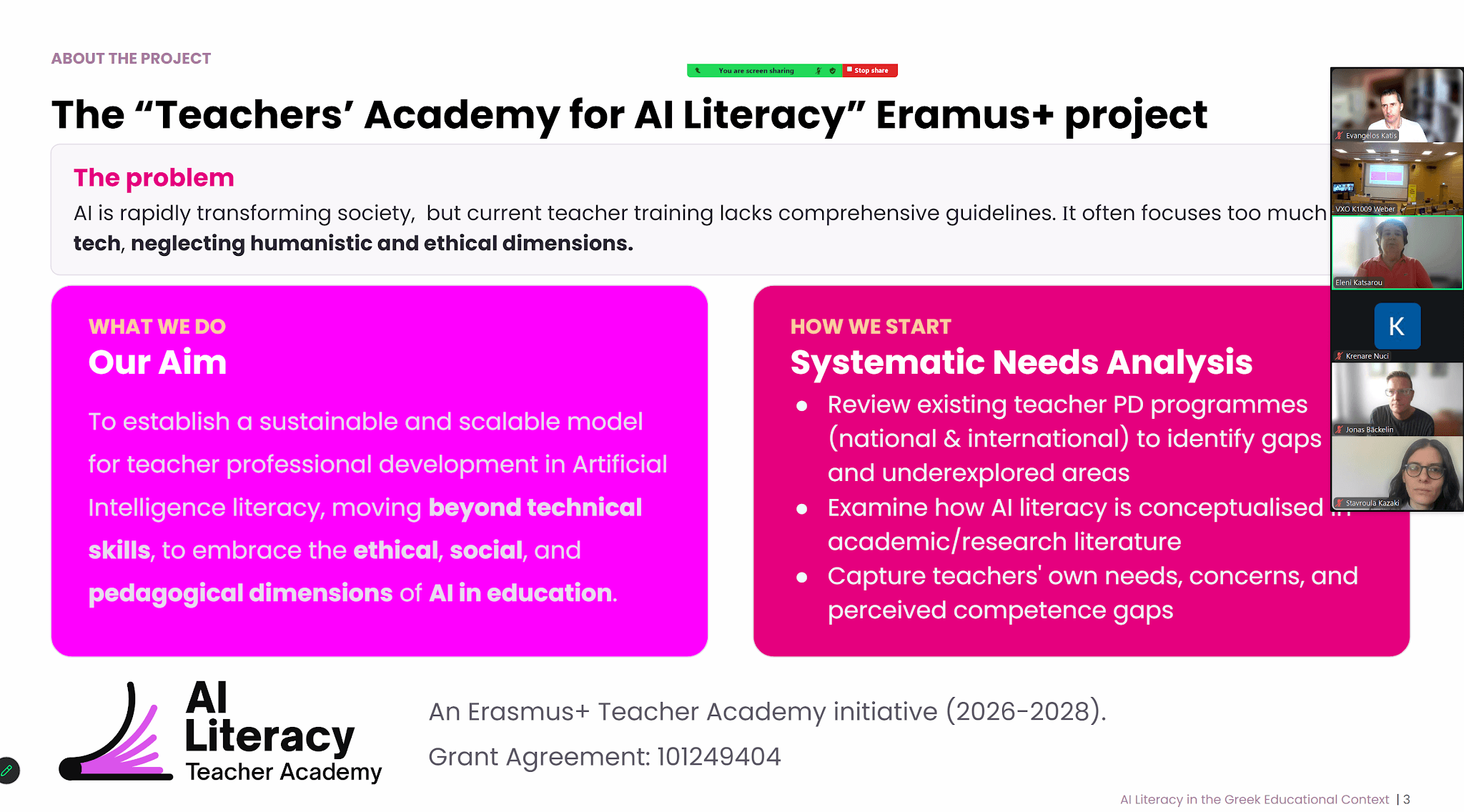
Advancing AI literacy through research, ethical awareness, and teacher-centered approaches to digital transformation.
The AI-Literacy TeacherAcademy was represented by Anna Sfakianaki, Stavroula Kazaki, Eleni Katsarou, and Evangelos Katis from the University of Crete at the 5th International Symposium on Digital Transformation (ISDT26) in Växjö, Sweden.
Their presentation, titled “AI Literacy in the Greek Educational Context,” brought together insights from academic research, educational policy, and teachers’ perspectives to examine the opportunities and challenges of integrating Artificial Intelligence (AI) into education. The presentation highlighted the importance of equipping educators with the knowledge and skills needed to navigate an increasingly AI-driven educational landscape while ensuring that AI is used responsibly, ethically, and in accordance with relevant policies.
1. Understanding AI literacy in the Greek educational context
The presentation explored the current landscape of AI literacy in Greek education, focusing on the relationship between national policy frameworks, ethical considerations, and the everyday realities of teaching. It highlighted key challenges and the need to support educators in translating policy recommendations into meaningful classroom practices.
Key topics included:
- Educational policy and digital citizenship: Examining national policy guidelines concerning GDPR, student data privacy, and responsible digital participation.
- Ethical challenges and human oversight: Addressing algorithmic bias, ethical considerations, and the importance of keeping teachers involved in AI-supported classroom decisions.
- Research and teacher perspectives: Presenting empirical findings from a survey of 377 Greek teachers, highlighting existing classroom practices and urgent professional development needs.
2. Bridging the gap between policy and practice
A central message of the presentation was the need to bridge the gap between policy frameworks and their practical implementation in educational settings. While policies provide essential guidance for responsible AI adoption, teachers also need practical, context-sensitive training that reflects their everyday challenges and the needs of their students.
The findings reinforced the importance of teacher professional development in fostering AI literacy, supporting informed decision-making, and promoting responsible AI integration in schools.nal communities and initiatives working toward accessible, responsible, and human-centric AI education.
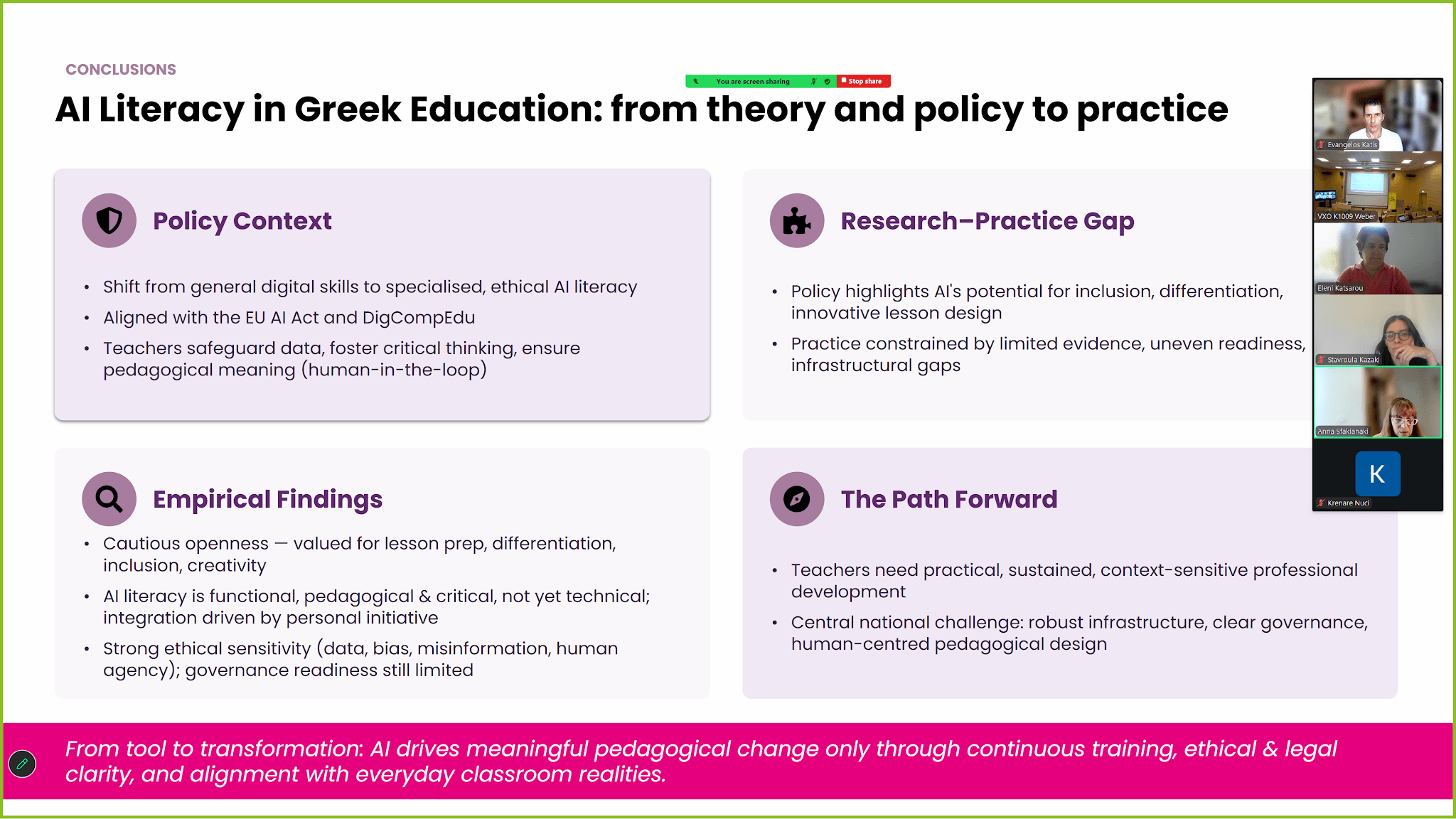

The University of Crete team presenting “AI Literacy in the Greek Educational Context” at ISDT26 in Växjö, Sweden.
Participation in ISDT26 provided an opportunity to share research findings, contribute to the international dialogue on digital transformation, and highlight the importance of teacher-centered approaches to AI education.
A heartfelt thank-you to Linnaeus University and the organizers of ISDT26 for hosting an engaging and impactful conference and providing a valuable platform for exchanging ideas and research on digital transformation.
Through research, collaboration, and educator-focused initiatives, the AI-Literacy TeacherAcademy continues to support the development of AI literacy and promote a more responsible, inclusive, and human-centric approach to AI in education.