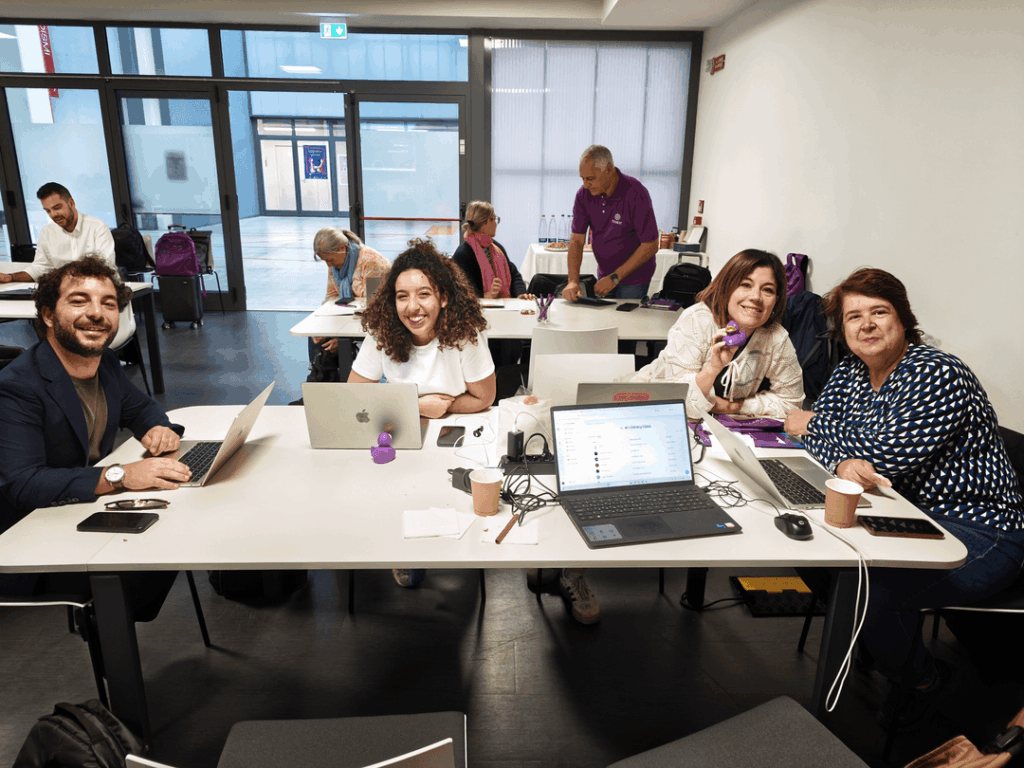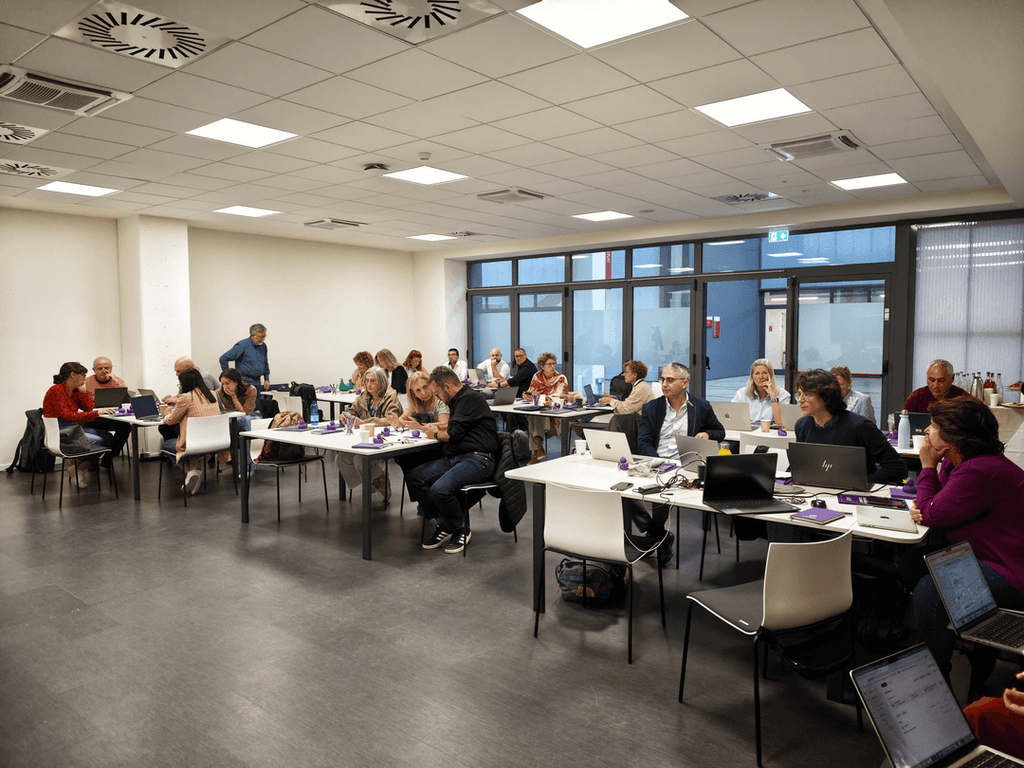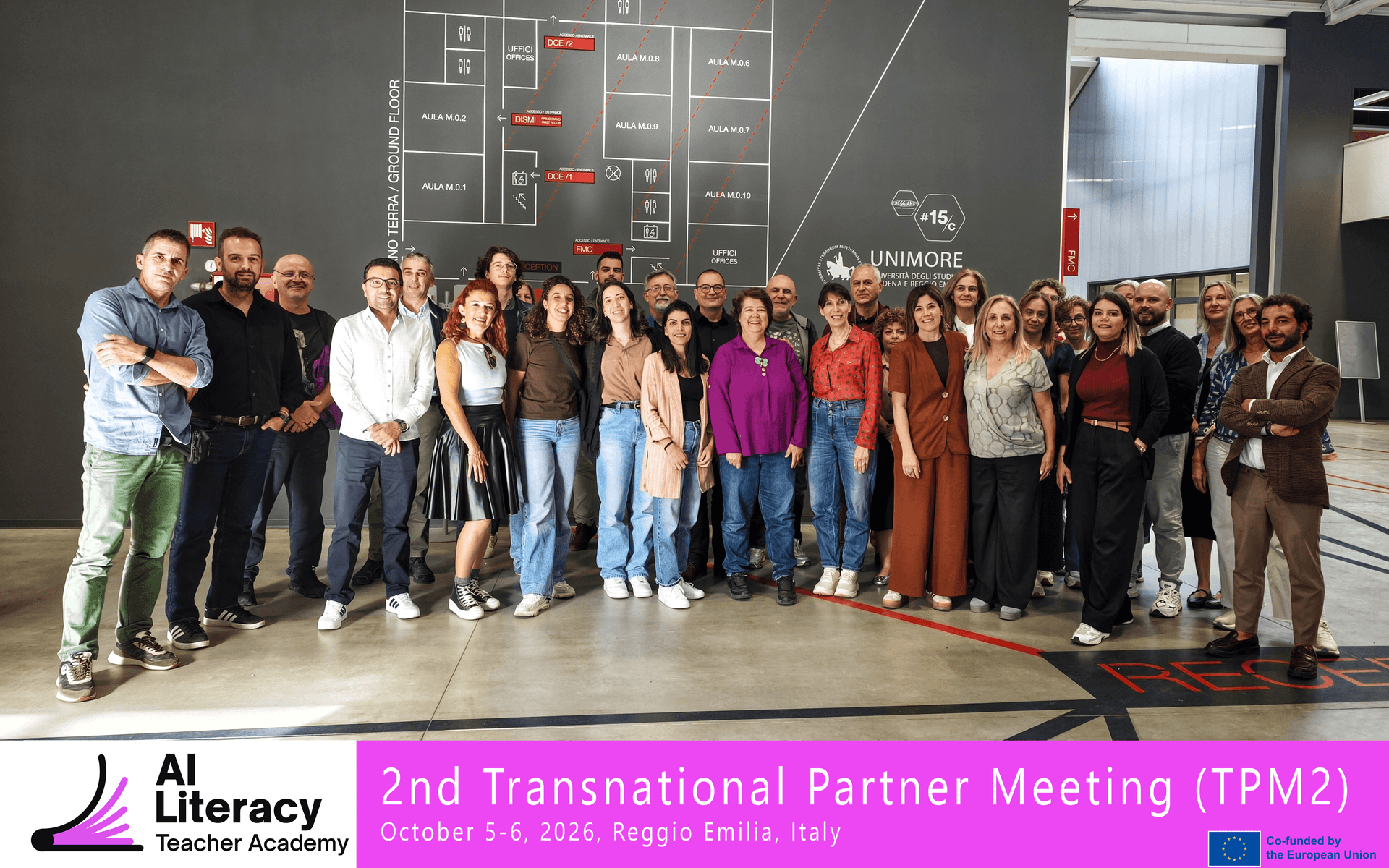
Artificial intelligence is becoming an increasingly important part of education, making it essential for teachers to understand not only how AI works, but also how to approach it critically, ethically and responsibly. With this in mind, partners of the Teacher Academy for AI Literacy came together on 5–6 October 2026 for the project’s second Transnational Partner Meeting (TPM).
Bringing together more than 30 representatives from the participating countries, the meeting provided an opportunity to review progress, exchange perspectives and shape the next phase of the project. Particular attention was given to the development of learning materials that will help current and future teachers build the knowledge and skills needed to address AI in educational settings.
1. Building the foundations of AI literacy for educators
A key focus of the meeting was the development of the Teacher Academy’s four learning units. Designed to combine essential knowledge with practical educational resources, the training will be accompanied by freely accessible online materials, including videos, activities and practical guides.
The four units will explore complementary dimensions of AI literacy:
- Understanding Artificial Intelligence: introducing the fundamental concepts behind AI, how it works and where it is applied.
- Democratic Values and Rules Around AI: examining how AI relates to society, rights, democratic principles and responsible use.
- Ethics and Critical Thinking: encouraging educators to reflect on ethical challenges, evaluate AI-generated information and question the outputs of AI systems.
- AI in Teaching and Learning: exploring meaningful and appropriate ways to integrate AI into educational practice.
Together, these learning areas aim to give educators a broader understanding of artificial intelligence and help them make informed decisions about its role in teaching and learning.
2. Preparing teachers for an AI-enabled society
The Teacher Academy for AI Literacy addresses the professional development needs of two groups: student teachers who are preparing to enter the profession and teachers who are already working in schools.
By providing both groups with accessible learning opportunities and practical resources, the project seeks to strengthen their confidence and competence in navigating AI-related opportunities and challenges. The ultimate aim is to support educators in helping their students develop the knowledge and critical awareness required to participate responsibly in a society increasingly shaped by artificial intelligence.
During the meeting, partners reviewed the learning content under development and discussed the work still needed to bring the materials to completion. The four units and their accompanying resources are expected to be ready by the end of 2026.
The next phase will involve testing the training through activities with teachers and student teachers across the participating countries. Feedback from these activities will help partners evaluate the materials, identify areas for improvement and refine the training before its wider use.
3. Coordinating the next steps across the project
Beyond the development of training content, the meeting provided a space to review progress across the project’s broader work programme and ensure that the different activities continue to move forward in a coordinated way.
Discussions covered several interconnected areas, including:
- The development of an AI literacy competence framework to guide educators’ learning and professional development.
- The design of teacher education and in-service training activities.
- Quality assurance and evaluation to support the relevance and effectiveness of the project’s outputs.
- Dissemination and sustainability, ensuring that the project’s results can reach relevant audiences and support longer-term impact.
Held in Month 10 of the project’s 36-month implementation period, the meeting marked another step in the collaboration established at the first Transnational Partner Meeting in Nicosia, Cyprus, in January 2026. The discussions helped partners align priorities, clarify upcoming tasks and maintain a shared direction for the work ahead.
As the project progresses, the focus remains on translating AI literacy principles into meaningful learning experiences that educators can apply in their professional practice.